IQVIA Logo
5704_Custom Photo_DS_NAMs_iPSC_Derived Intestinal Organoids HCI

HUMAN SAFETY NAMS

Mechanistic Toxicology Studies for Critical Clinical Development Decisions

A toxicity signal can change the trajectory of a drug development program.

Despite extensive preclinical safety testing, unexpected toxicities continue to emerge during clinical development and patient treatment. Our mechanistic toxicology studies help uncover the biological mechanisms behind these findings, establish human relevance, and generate the evidence needed to support critical development decisions.

Home / Solutions / Clinical Development / Mechanistic Toxicology Studies for Critical Clinical Development Decisions

Explore the NAMs Journey

Mechanistic toxicology is one component of a broader NAMs strategy.

Together, these complementary NAMs approaches help organizations make better decisions across the entire drug development continuum.

3715_Custom Photo_Laboratory professionals
Explore Early Safety Derisking

5161_Custom Photo_Abstract big data background using fuchsia, blue and teal dots and lines with a dark teal background
Explore IND-Enabling Safety Assessment

5704_Custom Photo_DS_NAMs_iPSC_Derived Intestinal Organoids HCI
You're in the right place with Mechanistic Toxicology Studies

card-3270_young woman scientist in laboratory working

Why Mechanistic Toxicology Studies Matter When Toxicity Creates Uncertainty

Unexpected safety findings often emerge when development programs have already required significant investment in time, resources, and scientific effort.

At this stage, teams face critical questions:

  • What biological mechanism is driving the toxicity?
  • Is it target-mediated or off-target?
  • Can the liability be mitigated?
  • Can the molecule be redesigned or refined?
  • Does the program remain viable?

Traditional toxicology is designed to identify hazards. Mechanistic toxicology studies are designed to understand the biological pathways responsible for those hazards.

When a toxicity signal emerges, the objective is no longer simply to confirm toxicity, but to determine why it occurs, whether it is clinically relevant, and how the risk can be predicted, mitigated, or managed.

Speak to an expert

Mechanistic Toxicology Studies Move Beyond Hazard Identification

Mechanistic toxicology studies rely increasingly on New Approach Methodologies (NAMs) to investigate human-relevant toxicity pathways.

Rather than functioning solely as alternative testing platforms, NAMs serve as investigative tools that enable scientists to dissect toxicity mechanisms, establish causality, and bridge clinical observations with biological understanding.

The key question is no longer "Does a drug cause toxicity?" but rather: "What mechanism drives the toxicity, under which conditions does it occur, and how can this knowledge be used for a risk mitigation plan?"

Our Integrated Mechanistic Toxicology Approach

Physiologically Based Pharmacokinetic (PBPK) and Computational Modelling

Connect molecular exposure with tissue-specific effects and anticipated human outcomes; highlighting by the integration of PBPK modelling with complex in vitro model toxicity assessment workflows.

Human-Relevant Models

Investigate toxicity in systems designed to better reflect human biology.

Advanced Cellular Systems

Characterize tissue-specific responses and uncover cell-type vulnerabilities.

Functional and Phenotypic Readouts

Move beyond viability measurements to assess biological consequences and mode of action.

Translational Biomarkers

Link in vitro findings to clinically relevant biological responses.

Integrated Scientific Interpretation

Generate evidence that supports development decisions, regulatory discussions, and risk mitigation strategies.

Can the Liability Be Managed?

Understand whether changes in dose, exposure, schedule, or formulation may reduce risk.

Can the Molecule Be Optimized?

Identify opportunities to modify the molecule while preserving efficacy.

Is the Toxicity Clinically Relevant?

Establish the translational relevance of observed findings using human-relevant systems.

Is Development Still Justified?

Differentiate manageable risks from program-ending liabilities.

Can Regulatory Confidence Be Strengthened?

Support scientific rationale with mechanistic evidence and human-relevant data.

For organizations navigating increasingly complex development programs, mechanistic understanding can become a critical decision-enabling asset.

How Mechanistic Toxicology Studies Support Go/No-Go Decisions

The ultimate goal of mechanistic toxicology studies is not simply to explain toxicity.

It is to support critical development decisions.

By generating mechanistic evidence, teams can better determine:

Mechanistic Toxicology in Action: Understanding Gastrointestinal Toxicity

Learning from Clinical Toxicities: Investigating EGFR Inhibitor-Associated Gastrointestinal Toxicity

Learn how human intestinal organoids and PBPK modelling were used to investigate EGFR inhibitor-associated gastrointestinal toxicity and generate actionable development insights.

Overview

EGFR inhibitors have transformed the treatment of EGFR-mutant cancers, particularly non-small cell lung cancer. Despite their clinical success, gastrointestinal adverse events remain a significant challenge. Among these, diarrhea is one of the most frequent and clinically significant toxicities, often resulting in dehydration, dose reductions, treatment interruptions, or treatment discontinuation. Afatinib, a second-generation irreversible EGFR inhibitor, is associated with a particularly high incidence of diarrhea compared with first- and third-generation EGFR inhibitors.

Traditional toxicology approaches can identify the presence of toxicity but frequently provide limited insight into the biological mechanisms driving these adverse events. Understanding why compounds targeting the same pathway exhibit markedly different gastrointestinal safety profiles requires a mechanistic approach.

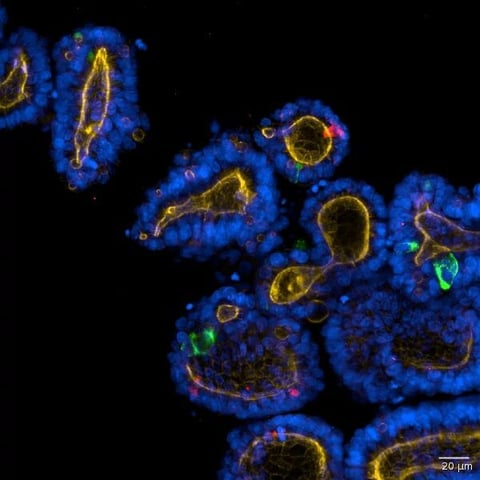
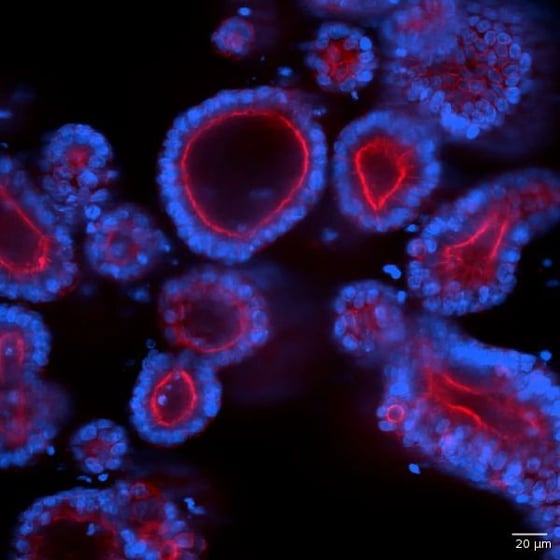
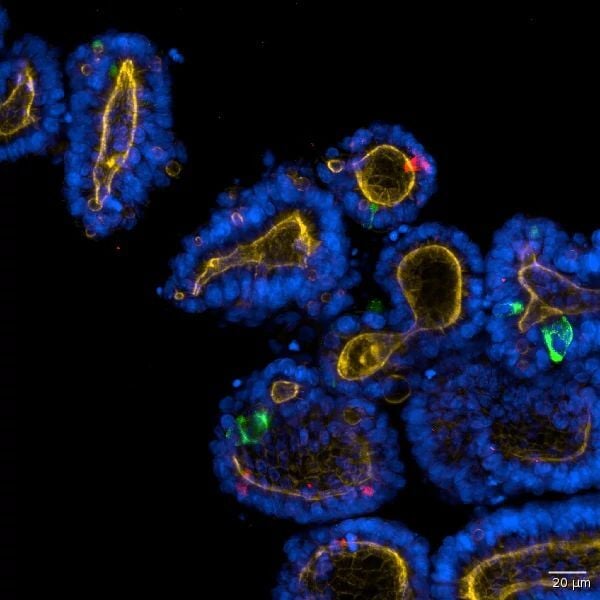
Human intestinal organoids offer a physiologically relevant model that recapitulates key features of the intestinal epithelium, including epithelial turnover, crypt renewal, barrier maintenance, and fluid homeostasis. These characteristics make organoids particularly well suited to investigate how EGFR inhibition disrupts intestinal homeostasis and leads to drug-induced diarrhea.

Challenge

Understanding Clinical Diarrhea Risk

The evolution of EGFR inhibitors from first- to third-generation compounds has been accompanied by significant differences in the incidence and severity of clinical diarrhea. Could these differences be explained and predicted using a human-relevant in vitro model?

Clinical experience has demonstrated that gastrointestinal toxicity varies substantially across EGFR inhibitors despite targeting the same signaling pathway. Importantly, diarrhea is not an off-target toxicity. Rather, it represents an exaggerated on-target pharmacological effect occurring in normal tissues where EGFR signaling plays an essential physiological role. EGFR signaling regulates intestinal epithelial proliferation, tissue renewal, barrier integrity, and fluid balance. Inhibition of these processes can lead directly to gastrointestinal dysfunction and diarrhea.

The challenge was therefore to determine whether human intestinal organoids could reproduce the clinically observed differences in gastrointestinal toxicity between EGFR inhibitors and provide mechanistic insight into the biological processes underlying these adverse effects.

Solution

Human Organoids + PBPK

Human intestinal organoids and translational exposure modelling were combined to investigate gastrointestinal toxicity mechanisms.

Solution Headline

Human intestinal organoids were used to assess epithelial injury, barrier integrity, apoptosis, cell proliferation, and exposure-response relationships using multiparametric imaging and functional readouts.

To strengthen translational relevance, PBPK modelling was incorporated to estimate clinically relevant intestinal concentrations and recreate human exposure scenarios within the experimental system.

Results

Translational Mechanistic Insights

The model reproduced clinically relevant gastrointestinal toxicity patterns and generated actionable safety insights.

Result Headline

The organoid platform differentiated between EGFR inhibitor generations in a manner consistent with clinical observations. Afatinib exhibited a greater gastrointestinal liability than first-generation inhibitors such as gefitinib and third-generation inhibitors such as osimertinib, reflecting its broader and more potent inhibition of wild-type ErbB signaling in healthy intestinal tissue.

By combining human intestinal organoids with PBPK-informed exposure modelling, the study established a translational framework capable of linking clinical observations to underlying biological mechanisms. The work illustrates how mechanistic toxicology can move beyond hazard identification to provide actionable insights that support compound optimization, candidate selection, and more informed risk assessment during drug development.

Therapeutic Modalities

Find out more about mechanistic toxicology by therapeutic modality.

Mechanistic Toxicology Studies Across Therapeutic Modalities

Mechanistic toxicology studies can be applied across multiple therapeutic modalities to investigate toxicity mechanisms, assess human relevance, and support development decisions.

Small Molecules

Small Molecules

Investigate organ-specific toxicities, pathway-driven adverse events, and exposure-dependent liabilities.

Biologics

Biologics

Characterize target-mediated toxicities, immune-related responses, and tissue-specific effects.

Cell Therapies

Cell Therapies

Evaluate off-tumor activity, cross-tissue responses, and immune-driven damage mechanisms.

Oligonucleotides

Oligonucleotides

Explore novel safety liabilities using advanced human-relevant systems and translational approaches.

5718_Custom Photo_DS_Cellular_Morphology _Human_Intestinal_Organoid 2

Human-Relevant Models Designed to Improve Translational Understanding

Understanding toxicity requires biology that is relevant to humans.

Access a broad portfolio of human primary cells, iPSC-derived models, and organoids spanning gastrointestinal, liver, cardiac, immune, neurological, pulmonary, renal, and vascular systems.

These models can be combined with:

  • High-content imaging
  • Multiparametric phenotyping
  • Functional assays
  • Cytokine profiling
  • Translational biomarkers
  • Computational modelling

to reveal mechanisms that may not be accessible through traditional approaches alone.

Speak With a Mechanistic Toxicology Expert

Why Partner with IQVIA for Mechanistic Toxicology?

Human-Relevant NAMs
Leverage advanced organoid and cellular systems designed to improve translational relevance.

Mechanistic Science
Move beyond hazard identification to understand causality and biological drivers.

Translational Expertise
Combine experimental biology with exposure modelling and clinical context.

Development-Focused Decision Support
Generate evidence that informs real go/no-go and risk-mitigation decisions.

3727_Custom Photo_Laboratory professionals

Frequently Asked Questions (FAQs) about Mechanistic Toxicology

 
What is mechanistic toxicology?

Mechanistic toxicology investigates the biological processes responsible for adverse findings, helping researchers understand why toxicity occurs and how it may impact development decisions.

When are mechanistic toxicology studies typically performed?

These studies are commonly used after a safety signal emerges during discovery, IND-enabling studies or clinical development.

How do NAMs support mechanistic toxicology?

Human-relevant models such as organoids and advanced cellular systems can provide insights into toxicity pathways that may be difficult to assess using traditional approaches alone.

Can mechanistic toxicology support clinical safety investigations?

Yes. Mechanistic studies can help determine the biological basis of observed clinical toxicities and support risk assessment or mitigation strategies.

Why use organoids for mechanistic investigations?

Organoids recreate key aspects of human tissue biology, enabling investigators to evaluate toxicity in a system with greater physiological relevance.