Human-Relevant Safety for mAbs
Evaluate safety liabilities, target-specific effects, and translational risk to support more confident IND-enabling decisions.

HUMAN SAFETY NAMS
IND-enabling safety requires human-relevant safety data that can identify potential liabilities before first-in-human studies. For many biologics and advanced therapies, traditional animal toxicology models may not fully predict human-specific safety risks. Human Safety NAMs (New Approach Methodologies) help generate predictive safety insights that strengthen IND-enabling studies, support regulatory strategies, and improve confidence in clinical progression.
By integrating predictive safety insights into IND-enabling studies, sponsors can evaluate safety alongside efficacy before clinical exposure. This approach supports better development decisions, helps prioritize the right candidates, and reduces the likelihood of discovering critical liabilities late in development.
Sponsors increasingly require human-relevant data that can support regulatory discussions, strengthen scientific rationale, and address challenges associated with human-specific biology. Human Safety NAMs provide an additional layer of confidence as complex programs progress into clinical development.
IND submissions supported
Bispecific INDs
CAR-T INDs
Programs progressed to first-in-human studies
Organ systems covered
Human-Relevant Safety Expertise
Multidisciplinary experts support IND-enabling safety studies across diverse therapeutic modalities.
Human-Relevant Safety Data
We generate human-relevant data to evaluate risks before first-in-human studies.
Regulatory-Ready Safety Assessment
Predictive safety assessments support informed and confident IND progression decisions.
Translational Focus
Studies generate actionable insights linking biology, safety risk, and clinical development.
Broad Therapeutic Experience
Extensive experience across antibodies, ADCs, cell and gene therapies, and oligonucleotides.
Flexible Development Strategies
Tailored safety programs align with development goals, timelines, and milestones.
Drug development teams need safety insights before clinical exposure, not after it. Human Safety NAMs (New Approach Methodologies) help identify potential liabilities by evaluating therapeutics within systems modeled on human biology. By integrating human-relevant safety assessments into IND-enabling studies, sponsors can generate evidence that supports risk characterization, mitigation planning, and more confident progression decisions.
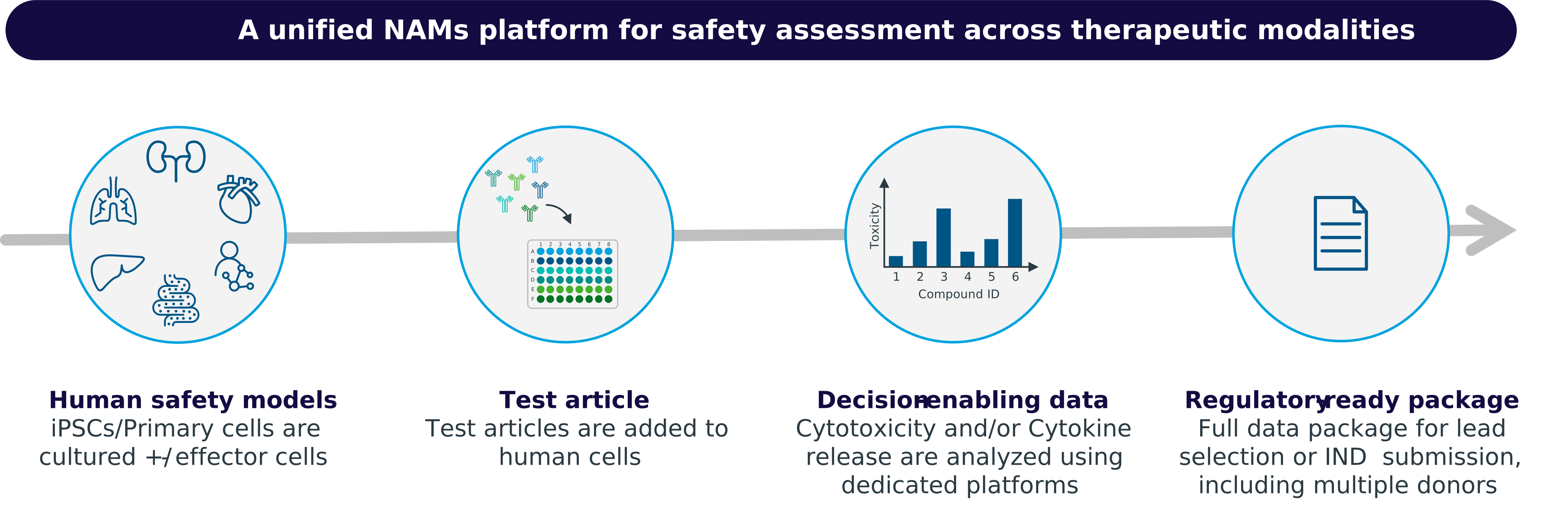
These approaches integrate primary human cells, induced pluripotent stem cell (iPSC)-derived models, organoids, immune co-culture systems and mechanistic assays to provide earlier insight into potential liabilities.
Rather than relying solely on downstream toxicology findings, Human Safety NAMs can identify safety signals during IND-enabling studies, when development teams still have opportunities to modify strategies, prioritize candidates, implement mitigation plans, or refine clinical development pathways. Human-relevant safety assessment can generate evidence related to on-target toxicity, off-target effects, cytokine release, immune activation and organ-specific liabilities.
The objective is not simply to produce additional data, but to establish a compelling weight of evidence that supports IND submission and regulatory confidence. Human Safety NAMs help sponsors understand where risks may emerge, how they may be managed, and whether the overall benefit-risk profile supports progression into clinical development. By introducing human-relevant safety insights at the IND stage, these approaches support stronger IND-enabling strategies and more confident first-in-human decision making.
Regulatory agencies are increasingly supporting the fit-for-purpose adoption of New Approach Methodologies to improve the human relevance of safety assessments and advance the long-term goal of reducing reliance on animal testing. This evolution reflects growing recognition that certain modalities may require additional evidence beyond conventional animal models to adequately characterize safety risk.
For biologics, species-specific target expression and immune responses can limit the translational relevance of traditional toxicology approaches. Human Safety NAMs provide mechanistic and human-relevant data that can strengthen weight-of-evidence assessments, support scientific rationale, and contribute to more informed regulatory discussions.
Importantly, Human Safety NAMs are not positioned as a universal replacement for animal studies. Rather, they are increasingly used as complementary tools that provide additional insight into human biology. When applied appropriately, these approaches can strengthen IND-enabling studies, improve risk characterization and support confidence in first-in-human planning.
Our advanced human in vitro platform enables robust, translatable safety data, significantly reducing—and in specific cases even eliminating—the need for animal toxicology studies.
David Fischer, PhD
Chief Translational Officer
Human Safety NAMs generate decision-relevant evidence by evaluating safety risks directly in human-relevant systems. These approaches help identify liabilities that may impact IND progression, clinical trial design, and first-in-human readiness. By providing mechanistic and human-relevant insight earlier in development, Human Safety NAMs help teams assess risk before clinical exposure and make more informed development decisions.
Immune-mediated toxicities can significantly impact the safety profile of biologics such as bispecific antibodies, T-cell engagers, and cell therapies. Human Safety NAMs can characterize cytokine release and immune activation using human immune cell systems, providing important information about potential clinical risk before first-in-human studies.
Many biologics are designed to target proteins that may also be expressed in healthy tissues. Human Safety NAMs help assess on-target and off-tumor effects by evaluating therapeutic activity across relevant human tissues, supporting identification of potential liabilities and more informed development decisions for IND-enabling.
Understanding neurological safety risk is increasingly important for biologics and immune-based therapies. Human-relevant CNS models can help distinguish target-specific activity from off-organ neurological effects, providing insight into potential neurotoxicity and supporting more comprehensive IND-enabling safety assessment.
Human Safety NAMs enable safety assessment across multiple biologically relevant tissues, including heart, liver, CNS, immune system, kidney and gastrointestinal models. Evaluating risk across multiple organ systems helps development teams build a broader understanding of safety before clinical exposure and contributes to more confident IND-enabling strategies.
Safety data creates value when it informs decisions. Human Safety NAMs generate predictive safety insights that help development teams identify, characterize, and mitigate risks before clinical exposure, supporting stronger IND-enabling strategies and more confident first-in-human decisions.
Biologics frequently involve human-specific biology that may be difficult to evaluate using conventional animal models.
Human-relevant models were used to assess safety across multiple tissues and biologically relevant systems.
Decision-ready data supported risk mitigation and more confident IND progression.
Featured Case Studies:
HER2 Bispecific Antibody: Early Identification of Cardiac Liability
Early Identification of Cardiac Liability. Human cardiomyocyte models identified selective cardiac liability before clinical progression, enabling risk mitigation and more informed IND positioning.
T-Cell Engager:
Distinguishing Tumor Activity from Neurotoxicity Risk. Tumor-specific activation was differentiated from neuronal responses, supporting confidence in the safety profile.
CAR-T Therapy:
Multi-Organ Safety Assessment. Human-relevant models enabled simultaneous assessment of cardiac, hepatic and CNS safety risks for IND readiness.
Supporting IND-enabling safety across most complex therapeutic modalities.
Evaluate safety liabilities, target-specific effects, and translational risk to support more confident IND-enabling decisions.
Evaluate immune activation, on-target/off-tumor effects, and tissue-specific safety risks using human-relevant models.
Characterize payload-driven toxicity, target-mediated effects, and organ-specific safety liabilities before clinical development.
Assess immune-mediated toxicities and multi-organ safety risks using human-relevant systems that support first-in-human planning.
Evaluate target-specific effects, tissue tropism, and potential safety liabilities using human-relevant safety assessment approaches.
Characterize tissue-specific responses and translational safety signals to support IND-enabling studies.
Assess biological activity, safety liabilities, and potential risks before first-in-human studies.
Primary and iPSC-derived human models
Generating meaningful human-relevant evidence requires access to the right model systems. IQVIA's Human Safety NAMs platform incorporates more than 70 primary human and iPSC-derived cell models representing major organ systems and biologically relevant tissues. These models support evaluation of safety risk across multiple therapeutic modalities and development programs.
Available systems include:
Combined with mechanistic endpoints such as cytotoxicity, cytokine release, and immune activation, these models enable development teams to generate human-relevant safety data that directly support IND-enabling studies and first-in-human planning.
Human-Relevant Safety Expertise
Our multidisciplinary teams combine expertise in toxicology, translational science, immunology, biologics development, and regulatory strategy to support IND-enabling studies across a broad range of therapeutic modalities.
Human-Relevant Safety Data
We generate human-relevant safety data using primary human cells, iPSC-derived models, and immune co-culture systems to evaluate potential liabilities prior to first-in-human studies.
Regulatory-Ready Safety Assessment
Our approach is designed to strengthen weight-of-evidence assessments through predictive safety assessment, mechanistic understanding, and regulatory-ready safety data that support informed IND progression decisions.
Translational Focus
Every study is designed to generate actionable insights that connect human biology, safety risk characterization, and clinical development, enabling more confident first-in-human planning.
Broad Therapeutic Experience
Our teams support biologics safety assessment across monoclonal antibodies, bispecific antibodies, antibody-drug conjugates (ADCs), T-cell engagers, CAR-T therapies, gene therapies, oligonucleotides, and other advanced modalities.
Flexible Development Strategies
From targeted IND-enabling studies to integrated safety assessment programs, we tailor solutions to the scientific objectives, timelines, and decision milestones of each development program.
Studies conducted before an IND submission to characterize safety and support progression into human clinical trials.
Human-relevant New Approach Methodologies used to assess safety through human cells, organoids, computational models and advanced analytical platforms.
They generate mechanistic and human-relevant safety data that strengthen scientific rationale and risk assessment.
Many biologics interact with human-specific targets that are not adequately represented in animal models.