Behavioral Assessment
-
Open field testing
-
Radial arm water maze
-
Contextual fear conditioning
-
Nest-building assessment
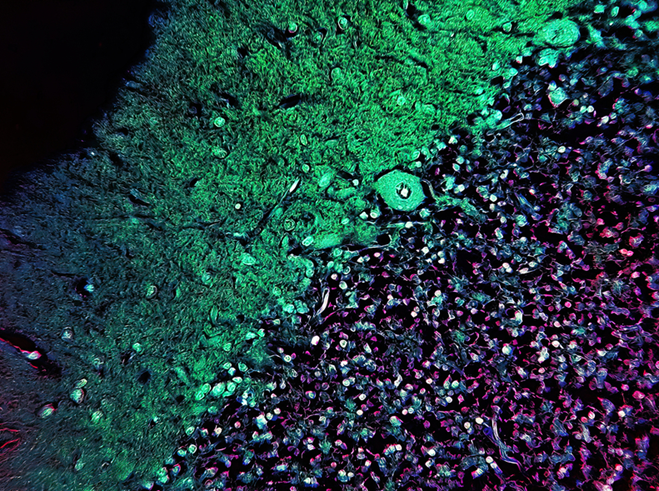
Alzheimer's disease remains one of the most challenging neurodegenerative disorders for therapeutic development. Successful programs require preclinical models that replicate key aspects of therapeutic target pathology and disease biology.
Successful programs require preclinical models that replicate key aspects of disease biology, enabling robust assessment of target engagement, pharmacodynamic response, efficacy, and translational biomarkers. We leverage well-characterized transgenic mouse models to evaluate therapies targeting amyloid pathology, tau pathology, neuroinflammation, synaptic dysfunction, and neurodegeneration. Our neuroscience team supports drug developers, biotechnology companies, and pharmaceutical organizations with integrated Alzheimer's disease research services spanning in vitro models and assays, in vivo pharmacology, biomarker analysis, histopathology, and translational data interpretation. We work with you to align model selection with therapeutic mechanism, development stage, and translational objectives.
An aggressive amyloid pathology model that develops early plaque deposition, neuroinflammation, deficits in cerebral blood flow and vascular reactivity, as well as cognitive impairment. Frequently used for evaluating anti-amyloid therapeutics and disease-modifying interventions.
A widely characterized APP-overexpressing model used for assessing amyloid-targeting therapies, biomarker changes, deficits in cerebral blood flow and vascular reactivity, as well as cognitive performance, and neuroinflammatory responses.
A robust tauopathy model characterized by progressive tau pathology, neurodegeneration, and behavioral deficits. Particularly valuable for evaluating anti-tau therapeutics and mechanisms targeting neurofibrillary pathology.
Our extensive capabilities and translational endpoints include:
Open field testing
Radial arm water maze
Contextual fear conditioning
Nest-building assessment
Open field testing
Radial arm water maze
Contextual fear conditioning
Nest-building assessment
MRI volumetry
Magnetic resonance spectroscopy (MRS) for neurometabolites
FDG-PET imaging of neurometabolism
TSPO-PET imaging of neuroinflammation
Vascular reactivity (functional ultrasound)
Longitudinal ARIA detection
BBB permeability
Amyloid beta
Tau and phospho-tau
NfL
Cytokines
Microgliosis
Astrogliosis
Recommended models: 5xFAD or Tg2576
Recommended models: PS19 (P301S)
Recommended models: 5xFAD or PS19 (P301S)
Choosing the appropriate model is critical to generating meaningful preclinical data. Different in vivo models reproduce distinct components of Alzheimer's disease biology, including amyloid pathology, tau aggregation and propagation, neuroinflammation, synaptic dysfunction, neurodegeneration and cognitive impairment. Our scientists work closely with sponsors to align model selection with therapeutic mechanism, development stage, and translational objectives.
5xFAD mice develop amyloid pathology rapidly and display early phenotypes, while Tg2576 mice show a slower disease progression. Both models are frequently used for longitudinal efficacy studies.
PS19 (P301S) mice are specifically designed to model tau dysfunction and neurodegeneration.