ALS Models for Preclinical Drug Discovery
Successful ALS drug discovery requires translational models that capture key disease mechanisms, support biomarker development, and provide actionable insights for therapeutic decision-making.
Amyotrophic lateral sclerosis (ALS) remains one of the most challenging neurodegenerative diseases to treat, with complex and multifactorial disease biology driving an urgent need for drug discovery and development. Our integrated portfolio of ALS models combines physiologically relevant in vitro systems with validated in vivo disease models to support discovery, lead optimization, and preclinical development. By leveraging human-derived cellular models, advanced phenotyping capabilities, and disease-relevant endpoints, we help biopharma innovators evaluate therapeutic candidates across the ALS research continuum.
Comprehensive In Vitro ALS Models and Assays
Human cell-based ALS models provide a powerful platform for studying disease mechanisms and screening therapeutic candidates in clinically relevant systems. These models enable investigation of ALS pathology and evaluate a broad range of therapeutic modalities, including small molecules, antisense oligonucleotides (ASOs), and gene therapies.
- Human induced pluripotent stem cell (iPSC)-derived models
- Harboring mutations in key ALS-associated genes, including SOD1, TDP-43, FUS, and C9orf72
- With modulated expression of key ALS-related genes by siRNA, shRNA or knockdown ASOs
- In-house differentiation of patient-derived or client-provided stem cells to generate motor and cortical neurons
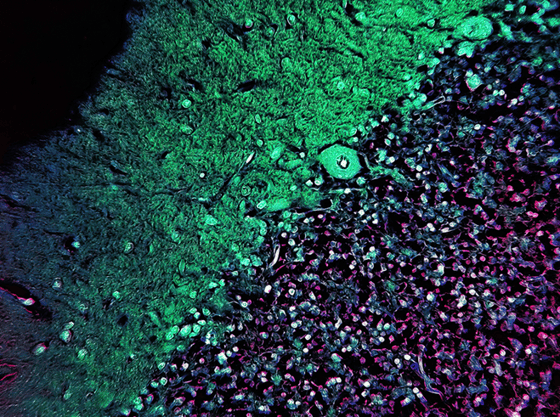
- Human post-mortem tissue, including paraffin-embedded and frozen brain tissue from ALS patients and healthy subjects, via the Netherland Brain Bank
- Exogenous expression of targets in immortalized cells lines, suitable for large screening campaigns
Our ALS models support the assessment of critical disease-relevant endpoints. These advanced ALS models generate mechanistic insights while enabling scalable compound screening and candidate prioritization.
- TDP-43, FUS, and SOD1 protein localization and aggregation
- C9orf72 RNA foci and dipeptide repeat protein formation
- Stress granule dynamics
- Nucleocytoplasmic transport dysfunction
- mRNA and protein levels of downstream mis-spliced genes
- Functional neuronal activity measured through multielectrode array (MEA) and electrophysiology platforms
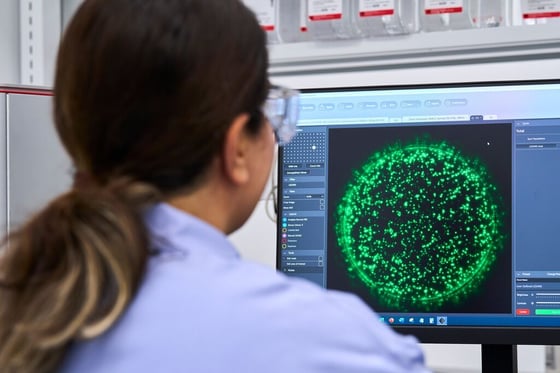
- Neurite outgrowth, regrowth and degeneration, using high-content imaging
- Cytotoxicity and cell viability
- Target mRNA and protein knockdown
Validated In Vivo ALS Animal Models
Translational in vivo ALS models are critical for evaluating therapeutic efficacy, biomarker responses, and disease progression in an integrated biological system. Our portfolio includes well-characterized transgenic mouse models that recapitulate key features of human ALS pathology and enable robust preclinical evaluation. These models enable investigation of target engagement, biomarker exploration, and drug efficacy studies for small molecules, RNA therapeutics such as ASOs, and gene therapies. By combining functional, imaging, and molecular endpoints with optimization of formulation, dose schedule and route of administration, our studies are explicitly designed to ensure your candidate has the right profile to succeed.
The SOD1 G93A transgenic mouse model is one of the most widely used ALS models in preclinical research. Expressing the G93A mutant human SOD1 protein, these animals develop progressive motor dysfunction and neuropathology that closely resemble those of limb-onset ALS in humans.
- Changes in posture, gait, and limb movements can be detected from 11 weeks of age with fine kinematic gait analysis
- Onset of visible changes in motor function (rotorod performance, grip strength) from 13 to 15 weeks of age
- Impaired motor neuron function detected from around 13 weeks, with compound muscle action potential (CMAP) measurement
- MRI shows reduced brainstem total volume
- Ex vivo analysis shows loss of motor neurons, degradation of neuromuscular junctions, axonal damage, neuroinflammation in the spinal cord, and increased NfL levels.
The inducible rNLS8 TDP-43 mouse model enables the study of TDP-43 pathology and reproduces key clinical and pathological features of disease progression. The model is characterized by cytoplasmic TDP-43 accumulation and phosphorylation in motor neurons, key pathologies observed in both sporadic and familial ALS.
- Expression and accumulation of hTDP-43 ΔNLS in the cytosol of motor neurons is induced by doxycycline removal from the diet
- Hind limb weakness apparent from 7 days after doxycycline removal
- Dramatic reduction in motor function from 2 weeks after doxycycline removal
- Increased NfL in CSF, suggesting extensive axonal damage, and neuromuscular junction disintegration
- Increased total and phosphorylated TDP-43 detected in the spinal cord, with cytosolic localization
The efficacy of novel therapeutics in both SOD1 and TDP43 ALS models can be assessed using a range of translational readouts and bioanalytical techniques. Multiple sensitive biomarkers can be used to detect pathological changes even before clinical symptom manifestation. By integrating functional, molecular, imaging and behavioral endpoints with smart data analysis and deep disease understanding, we quickly assess the effectiveness of drug action in the disease context.
- Survival and disease progression monitoring
- Motor function tests such as grip strength and Rotarod performance
- Fine kinematic gait and motor assessment
- Electrophysiological endpoints (CMAP, EMG)
- Translational in vivo imaging, including MRI and PET imaging
- Neuromuscular junction integrity assessments
- Gene and protein expression analysis of target molecules (e.g. SOD1, TDP-43)
- Biomarker analysis, such as neurofilament light chain (NfL), neuroinflammation markers, and indicators of neuronal loss
- Histopathology and bioanalysis
Why Choose Us for ALS Drug Discovery
Effective ALS drug development demands models that reflect human disease biology while delivering reproducible, decision-enabling data. Our translational approach combines patient-derived cellular systems, validated animal models, advanced analytics, and therapeutic expertise to support a broad range of modalities, from small molecules to next-generation ASOs and gene therapies.
Whether your program is focused on target validation, screening, lead optimization, or preclinical efficacy studies, our ALS models provide the insights needed to accelerate the development of innovative therapies for patients living with ALS.
Why High-Quality ALS Models Matter
The high failure rate of neurodegenerative disease drug development emphasizes the importance of selecting predictive preclinical ALS models. Effective models must not only reproduce key pathological features of ALS, but also generate translational biomarkers, functional endpoints, and mechanistic insights that can improve confidence in clinical decision-making.
By integrating patient-derived in vitro systems, genetically relevant ALS animal models, advanced imaging, electrophysiology, and biomarker analysis, our drug discovery services enable a better understanding of disease mechanisms and the identification of therapeutic candidates with the greatest potential to impact patient outcomes.
Understanding ALS Disease Pathology
Amyotrophic lateral sclerosis (ALS) is a progressive and fatal neurodegenerative disease characterized by the selective degeneration of upper and lower motor neurons in the brain, brainstem, and spinal cord. As motor neurons are lost, patients experience worsening muscle weakness, spasticity, muscle wasting, and paralysis, ultimately leading to respiratory failure. Despite decades of research, ALS remains an area of significant unmet medical need, with limited treatment options and no curative therapies currently available.
ALS affects approximately 4 to 8 individuals per 100,000 people worldwide and is considered a highly heterogeneous disease. Most patients experience symptom onset in mid-to-late adulthood, although disease presentation, progression rates, and underlying biology can vary considerably between individuals. Median survival following diagnosis is typically between two and five years, highlighting the urgent need for innovative disease-modifying therapies.
The pathology of ALS extends far beyond motor neuron loss alone. Increasing evidence suggests that ALS results from multiple interconnected disease mechanisms that contribute to neuronal dysfunction and degeneration. Because these pathological processes interact throughout disease progression, successful therapeutic development requires ALS models that reflect both the molecular complexity and clinical heterogeneity of the disease.
- Protein misfolding and aggregation
- RNA processing abnormalities
- Mitochondrial dysfunction
- Defective axonal transport
- Glutamate-mediated excitotoxicity
- Neuroinflammation
- Oxidative stress
- Impaired nucleocytoplasmic transport
- Neuromuscular junction degeneration
- Dysfunctional protein clearance pathways
Approximately 90% of ALS cases are classified as sporadic, with no clearly defined single cause identified. The remaining 10% are familial forms of the disease linked to inherited genetic mutations. More than 20 genes have been associated with ALS, with mutations in SOD1, C9orf72, TARDBP (TDP-43), and FUS representing the most extensively studied and clinically relevant genetic drivers.
These discoveries have transformed ALS drug discovery by enabling the development of genetically relevant cell and animal models that reproduce key pathological hallmarks observed in patients. Today, many emerging therapeutic approaches, including antisense oligonucleotides (ASOs), RNA-targeted therapies, gene therapies, and precision medicines, are being evaluated through ALS models built around these disease-causing mutations.
One of the most important advances in ALS research has been the identification of TDP-43 pathology as a defining molecular feature of disease. In most ALS patients, TDP-43 protein becomes mislocalized from the nucleus to the cytoplasm, where it forms pathological aggregates that disrupt normal cellular function. These protein inclusions are associated with impaired RNA metabolism, defective protein homeostasis, and neuronal death. The importance of TDP-43 biology has driven the development of translational ALS models designed to replicate these disease processes and support evaluation of therapeutics targeting protein aggregation, neurodegeneration, and cellular dysfunction.
ALS is increasingly recognized as a disease involving multiple cell types beyond motor neurons. Astrocytes, microglia, and other support cells contribute to disease progression through inflammatory signaling, altered metabolic support, and disruption of neuronal homeostasis. Evidence of microglial activation, astrogliosis, axonal injury, and neuromuscular junction degeneration has been observed across both clinical and preclinical studies.
As a result, modern ALS models increasingly incorporate co-culture systems, patient-derived cellular models, and translational biomarkers to better capture the complex interactions between neurons and the surrounding microenvironment.