

IQVIA Logo
5133_Abstract digital technology background-1

Target Identification and Validation

 Successful drug development begins with selecting the right biological target. We apply a multidisciplinary approach to generate actionable insights that support informed decision-making earlier in the discovery process.
Home / Services / Discovery Sciences / Design & Developability / Target Identification and Validation


Identifying disease-relevant targets requires a deep understanding of biology combined with scalable experimental systems. We apply a multidisciplinary approach to target identification and validation that combines functional screening, cellular disease models, and computational analysis to reveal the pathways that influence disease mechanisms and identify the right targets with greater confidence.

Target Identification Services

We support target discovery programs through a combination of experimental and computational methodologies designed to generate robust biological evidence.

Advanced Cell Models & Assays

Conduct studies in human primary cells, differentiated stem cell-derived systems, and disease-relevant cell lines to improve biological relevance and translational value.

Bioinformatics

Transform complex biological data into meaningful insights through advanced bioinformatics, statistical analysis, and pathway interrogation. Our teams help connect experimental findings to disease mechanisms and therapeutic hypotheses.

Capture Compound Mass Spectrometry

Capture compound mass spectrometry (CCMS) is a target identification technology that facilitates target deconvolution and optimization by ranking protein interactors of small molecules. 

CRISPR Gene Editing

The ability to turn on and off genes using CRISPR Cas9 technology enables validation of compound-target interactions and discrimination between on-target and off-target effects.

High Content Imaging

Leverage automated screening technologies and multiparametric cellular readouts, such as cell painting, to evaluate complex biological responses.

Omics Methods

Integrate transcriptomic, genomic, and other omics datasets to uncover novel disease associations, identify biomarkers, and strengthen target selection decisions.

Mechanism of Action Studies

A promising target must be supported by a clear understanding of how it contributes to disease progression and therapeutic response.

Our mechanism of action studies help characterize:

•    Biological pathways affected by target modulation
•    Downstream molecular and cellular responses
•    Target-pathway relationships
•    Therapeutic hypotheses and disease relevance
•    Biomarker opportunities that may support future development

These insights provide the evidence needed to prioritize targets and advance programs toward lead discovery and preclinical development.

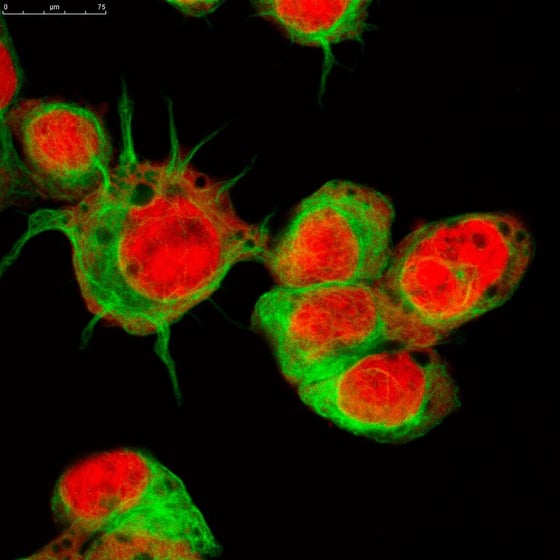
5623_Real fluorescence microscopic view of human neuroblastoma cells

Human-Relevant In Vitro Disease Models

The choice of model system can significantly influence target discovery outcomes. We utilize human primary cells (patient and healthy subjects) and human iPSC-derived cells as biologically relevant disease models to help ensure that discoveries are grounded in human biology. By examining targets within systems that more closely reflect disease physiology, we enable greater confidence in the translational potential of identified targets and reduce downstream development risk.

Why IQVIA Laboratories for Target Identification and Validation?

We bring together scientific expertise, advanced technologies, and translational research capabilities to help clients make more informed target selection decisions. The result is a comprehensive target discovery strategy designed to accelerate the identification and validation of novel therapeutic opportunities.

Our integrated approach combines:

•    In silico target assessment
•    Human-relevant cellular models
•    High-content screening technologies
•    Bioinformatics and data science capabilities
•    Omics-driven insights
•    Mechanistic biology expertise
•    End-to-end support across the discovery continuum
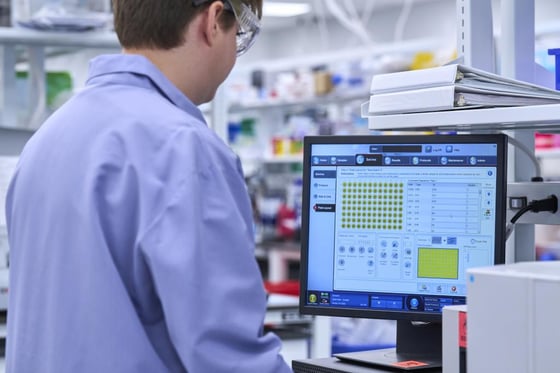
3714_Custom Photo_Laboratory professionals

FAQ About Target Identification

What is target identification in drug discovery?

Target identification is the process of discovering and validating a biological molecule, such as a gene, protein, RNA target, or signaling pathway, that plays a significant role in disease progression and can be therapeutically modulated. Effective target identification integrates biological evidence, disease understanding, and data-driven insights to help researchers focus on targets with the highest potential for clinical success. By prioritizing targets linked to disease mechanisms and patient outcomes, organizations can reduce development risk and improve decision-making early in the drug discovery process.

Why is target identification important for successful drug discovery?

Target identification helps establish the scientific rationale for a therapeutic program before significant development resources are invested. Selecting the right target can increase the likelihood of clinical success by ensuring that the therapy addresses a relevant disease mechanism. Conversely, poorly understood or insufficiently validated targets can contribute to late-stage failures. Robust target identification strategies combine biological, clinical, genomic, and real-world evidence to strengthen confidence in target selection.

How do artificial intelligence and advanced analytics support target identification?

Artificial intelligence (AI) and advanced analytics enable researchers to analyze large, complex datasets and uncover biological relationships that may not be apparent through traditional methods. AI-powered approaches can integrate genomic, transcriptomic, proteomic, clinical, and real-world data to identify novel targets, predict target-disease associations, and prioritize candidates for further investigation. These capabilities help accelerate discovery timelines while improving the quality of target selection.

What data sources are used during target identification?

Modern target identification relies on multiple complementary data sources to build a comprehensive understanding of disease biology. Common sources include genomic and multi-omic datasets, scientific literature, biomarker data, clinical trial results, real-world patient data, and disease pathway analyses. Integrating these datasets provides a more complete view of target relevance, biological function, and potential therapeutic impact across patient populations.

How does target validation differ from target identification?

Target identification focuses on discovering promising biological targets, while target validation confirms that modulating those targets is likely to produce a meaningful therapeutic effect. Validation activities may include laboratory experiments, functional studies, biomarker analyses, and clinical evidence reviews. Together, target identification and validation help organizations prioritize the most promising opportunities and establish a stronger foundation for downstream drug development.