
We deploy an in silico-first approach: generative AI coupled with medicinal chemistry, computational modeling, structural biology expertise, and AI-enabled prediction tools to identify and prioritize optimization strategies and molecules for synthesis.
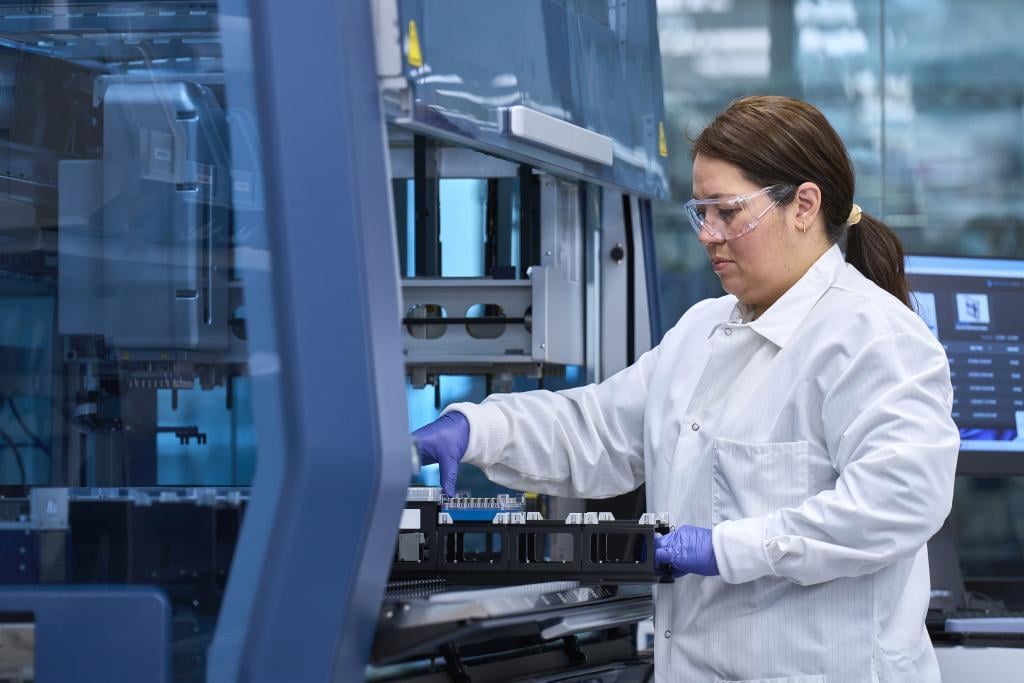
Hit to Lead
The transition from hit identification to lead series is a critical pivot point in drug discovery. Success requires identifying the optimal chemical series from which the ultimate candidate molecule will be generated, with focus on the desired target product profile.

What if you could get to the clinic one year earlier? It’s entirely possible with the right drug discovery partner. We accelerate hit-to-lead optimization projects through an ultra-efficient cycle of rational design, synthesis and biological evaluation, supported by an in silico first approach that super-charges the rapid delivery of quality lead molecules primed for lead optimization. By validating multiple chemical series simultaneously, we shave months off your timeline and clear a rapid path to lead optimization.
By uniting advanced AI/ ML computational approaches (via our proprietary Design and Predict Hub) through an integrated Design-Make-Test-Analyze (DMTA) workflow that combines medicinal chemistry, translational biology, DMPK, and pharmacology expertise inside a single discovery team, we help you make faster, more informed decisions to advance the most promising compounds at pace.
True lead generation requires balancing biological activity with physicochemical, pharmacokinetic, and safety-related properties. Our medicinal chemistry teams do not chase potency in isolation. They work in close collaboration with our biologists and DMPK experts to optimize across multiple project objectives simultaneously.
-
Medicinal Chemistry Expertise: Specialized in knowledge-based drug design and an in silico first approach via our proprietary Design and Predict Hub (AI/ML workflow) to expedite lead optimization. This supercharges DMTA cycles and prioritizes compounds most likely to meet the agreed-upon criteria.
-
Rapid analog design and synthesis: Quick generation of targeted compound arrays, triaged through our predictive software for optimal properties, using automation, deep synthetic expertise, and AI/ML optimized workflows.
-
Structure-activity relationship (SAR) exploration: Rapid and efficient mapping of the chemical landscape.
-
Scaffold diversification: Expertise in developing alternative chemotypes to by-pass issues
-
Property-driven design: Aligning potency with drug-like properties
Computational approaches play an important role in accelerating hit-to-lead programs. We use an in silico-first approach, deploying high-quality models and tools to forecast compound performance and tractability and to triage even before synthesis. These technologies are used in tandem with our human medicinal chemistry expertise to maximize discovery efficiency and reduce timelines.
-
Advanced CADD (Computer-Aided Drug Design): Molecular modeling, docking, and structure-based design approaches coupled to experimentally determined or predicted protein structures, together with molecular dynamics and physics-based methodologies, to understand and predict target interactions to guide compound optimization.
-
Embedded In Silico Design and Prediction: Accelerate the design of new molecules through our AI/ML workflow platform (Design and Predict Hub) using generative AI coupled to our proprietary high-quality predictive models. Use our large-scale, data-powered predictive models to inform decisions on compound prioritization and design throughout the optimization process. Identify potential liabilities earlier, focusing on the highest-value opportunities, thereby reducing unnecessary synthesis and testing cycles.
Understanding how compounds interact with biological targets can significantly improve optimization outcomes; our experts use structural biology in tandem with CADD to guide informed chemistry decisions and accelerate optimization cycles.
-
Crystallography: Generate detailed structural information that supports rational drug design and SAR interpretation.
-
Cryo-Electron Microscopy (Cryo-EM): Provide structural insights for complex and difficult-to-characterize targets.
-
Biophysical Characterization: Assess binding interactions, kinetics, and target engagement to strengthen confidence in candidate progression.
A lead compound must show meaningful, translatable activity long before it reaches a patient. Our expert teams provide definitive evidence of meaningful biological activity in human disease-relevant systems, enabling prioritization of your strongest series.
-
Deep Therapeutic Expertise: Lean on scientists with an average of over 15 years of industry experience across oncology, neuroscience, immunology and autoimmune, cardiovascular, and rare diseases
-
Translational Assays: Test in human cellular models and disease-relevant systems.
-
Mechanism of Action: Isolate and confirm target engagement and molecular pathway modulation
-
Biomarker identification and development: Identify and validate biomarkers that enhance translational relevance and serve as measurable indicators of therapeutic activity. Candidates are 2-10 times more likely to succeed in the clinic with a robust biomarker strategy.
Poor pharmacokinetics and weak developability profiles account for a large percentage of preclinical failures. We incorporate in silico prediction tools, ADME screening, and early safety assessment using human NAMs directly into early hit-to-lead cycles to de-risk your programs. Connecting in vitro and in vivo findings, we create a clear path towards identifying the ideal candidate.
-
In Vitro ADME: High-throughput tracking of solubility, metabolic stability, and permeability.
-
In Vivo DMPK: Characterize exposure, clearance, distribution, and pharmacokinetic behavior to guide compound selection and progression.
-
Early Safety Screening Removing toxicity risks early via our human New Approach Methodologies (NAMs) platform
-
Drug-Like Property Optimization: Use integrated data to improve overall candidate quality while balancing potency, selectivity, and pharmacokinetic performance.
An Integrated Hit to Lead Strategy
Identifying active compounds is only the beginning. The challenge is determining which chemical series have the greatest potential to deliver successful drug candidates. Through iterative optimization cycles, multiple compound series can be evaluated in parallel, enabling data-driven decisions throughout the program lifecycle.
Our scientists work alongside your teams to:
-
Define target product profiles and establish precise candidate criteria early
-
Prioritize series to rank hits via multi-parameter optimization (potency, selectivity and pharmacological performance)
-
De-risk early to address developability roadblocks
-
Work with you to help secure IP to protect resulting assets
5 Day DMTA
At the core of our discovery approach is an integrated DMTA framework that continuously fuses computational and experimental insights at speed.
Generate novel analog series through efficient synthetic AI-enabled chemistry workflows, including AI retrosynthetic scoring and prioritization at scale, automated parallel chemistry and high-throughput experimentation methods, all designed to increase speed and productivity and enable rapid chemical space analysis.
Evaluate compounds using carefully designed human disease-centric screening cascades spanning on-target engagement and biology, off-target activity, pharmacology, early safety, and developability metrics.
Run multivariate analysis of chemistry, biology, ADME, pharmacokinetic, and pharmacodynamic data to guide the next cycle of optimization and maximize project momentum.
Why Choose IQVIA Laboratories for Hit to Lead Services
Our multidisciplinary discovery teams bring together the capabilities and expertise needed to advance programs efficiently and reduce development risks early on. We combine our services into a single, connected scientific ecosystem. We focus exclusively on drug discovery enablement, and our goals are completely aligned with yours: delivering de-risked, high-quality assets at speed, ready for lead optimization.
- Embedded AI, machine learning and automation
- In silico predictive power
- Expert medicinal chemists
- Translational and disease biology specialists
- Human-relevant NAMs platform
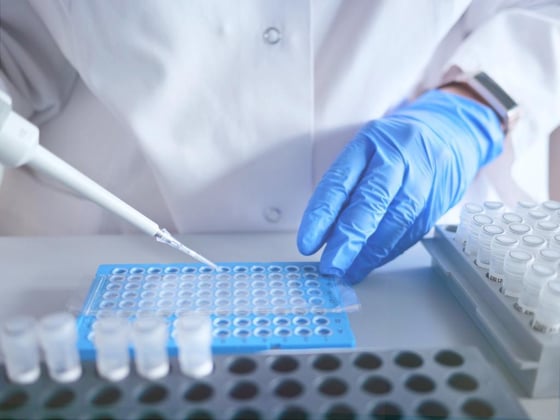
Frequently Asked Questions About Hit to Lead Drug Discovery
What is Hit to Lead in drug discovery?
Hit to Lead is the process of optimizing initial hit compounds into higher-quality lead series that possess the biological activity, selectivity, pharmacokinetic properties, and developability characteristics needed for further progression.
What is the difference between a hit and a lead?
A hit is a compound that demonstrates activity against a target. A lead is a more advanced compound or series that has undergone optimization and shows sufficient promise for continued development.
How does DMTA accelerate Hit to Lead programs?
DMTA integrates compound design, synthesis, testing, and data analysis into iterative optimization cycles, enabling faster decision-making and more efficient compound progression.
Why combine medicinal chemistry, biology, and DMPK?
Integrating these disciplines enables teams to balance potency, selectivity, pharmacokinetics, and developability simultaneously, reducing the risk of late-stage setbacks and improving candidate quality.
Does IQVIA Laboratories support both FFS and FTE engagements?
Yes. Flexible engagement models allow clients to access individual services or fully integrated discovery programs depending on project requirements.
