
Hit Identification
Identifying a molecule with confirmed activity in your ideal biological system can be challenging. An appropriate hit identification (Hit ID) campaign sets the tone for your drug discovery program through to market, with success driven by choices made at this early stage.
The quality of early hit identification decisions can have a lasting impact on the success of a drug discovery program. Our hit discovery services enable your to identify, evaluate, and prioritize promising compounds through a combination of experimental screening, computational approaches, advanced assay platforms, and scientific expertise.
Whether you are pursuing a validated molecular target, investigating a disease phenotype, or exploring novel biological mechanisms, our integrated hit identification capabilities are designed to generate robust, actionable data that supports confident progression into hit-to-lead and lead optimization. From initial concept through method selection, bespoke assay development and cascade design, our dedicated teams have the expertise and experience to help you uncover hits that you can progress with confidence.
We combine multiple complementary screening approaches to maximize the likelihood of discovering high-quality, developable hits. Our extensive hit identification toolbox covers molecular target-based approaches (employing both functional and affinity-based technologies), phenotypic approaches, and virtual screening approaches.
- High-Throughput Screening (HTS): Rapidly evaluate large compound collections using robust biochemical and cellular assays (either labeled or label-free) designed to identify active molecules against challenging targets.
- Virtual Screening and Computational Drug Discovery: Leverage structure-based, ligand-based, and AI/ML-driven virtual screening alongside computational chemistry and predictive analytics to forecast compound performance and prioritize compounds with the highest probability of success before experimental testing begins.
- High-Throughput Affinity Screening:
- Affinity Selection Mass Spectrometry (ASMS) Screening: Rapidly interrogate very large compound libraries to identify novel binders to your target, for further development into functional modulators, bifunctional molecules, or proximity inducers.
- DNA-Encoded Library (DEL) Screening: Interrogate exceptionally large compound libraries through DNA-encoded technologies to uncover novel binders and expand discovery opportunities beyond traditional screening approaches.
- Fragment Screening: Identify low-molecular-weight starting points that can be optimized into potent drug candidates. Fragment-based approaches provide an effective route for exploring novel chemical space and addressing challenging targets.
Modern Hit ID increasingly relies on an early understanding of complex biological responses in cellular contexts rather than on isolated biochemical endpoints. We offer diverse cellular platforms, from simple single-cell assays to sophisticated phenotypic screening approaches in highly translational, disease-relevant models.
- Cell-Based Assays: Assess functional responses in cellular models, such as immortal cell lines, primary cells, human iPSC-derived cells and complex cellular systems.
- High-Content Imaging: Capture rich, multiparametric data describing cellular responses to compound treatment using high-content imaging approaches, coupled with state-of-the-art AI-driven image analysis. This enables the identification of spatially resolved target activity, the characterization of subtle phenotypic changes, and the uncovering of new biological insights that may be missed through traditional screening methods.
- Automated Electrophysiology: Identify and characterize therapeutic functional effects on ion channels using high-throughput automated patch clamp platforms.
- We offer a broad portfolio of pre-developed, off-the-shelf ion channel assay panels that enable rapid project initiation, whilst also supporting the development of bespoke assays tailored to specific research needs.
- We can build bespoke lines if your channel of interest is not currently available in our existing catalog.
- Mechanism of Action Investigations: Combine screening data with multiomic approaches, advanced analytics, and biological expertise to understand how hits produce their effects and identify the most promising candidates for further development.
High-quality screening outcomes begin with access to high-quality, diverse, and relevant chemical matter. We provide access to carefully curated compound collections that support multiple screening modalities and therapeutic areas. Library selection can be tailored to specific target classes, biological hypotheses, or discovery objectives.
As part of hit identification programs, our expert teams can guide on the appropriate selection of screening sets, cluster and prioritize emerging putative series and further expand any equity through in silico hit expansion (into our own libraries & multiple external sources, including on-demand catalogs).
These capabilities help transform promising hits into stronger starting points for downstream development.
Every hit ID program within IQVIA Laboratories benefits from embedded medicinal chemistry support from the outset. This provides you with early and honest insight into the likelihood that the identified hits will progress to lead molecules. Our teams are aligned from the outset to help you develop your onward plan for progression by applying our combined drug-discovery knowledge. We offer:
- Early prioritization and de-risking through:
- In silico predictions on a range of ADME properties using our high-quality proprietary models
- Empirical profiling of key molecules through our fast turnaround Tier 1 ADME assays
- Design of a robust onwards assay cascade and strategy to drive your onwards drug-discovery campaign
- Application of AI-Enhanced drug-discovery to supercharge timelines to lead identification and optimization, and beyond
Target-Based Hit Identification
For programs focused on a known molecular target, we help determine the most appropriate modulation strategies and screening cascade to identify compounds exhibiting the desired biological activity.
Phenotypic Hit Identification
For programs driven by disease biology or cellular phenotypes, we employ physiologically relevant assays and advanced multi-parametric technologies to discover active compounds, even when the underlying molecular target is not yet fully understood. We can help with target identification from active compounds, through proteomics and computational clustering techniques.
Building the Right Hit Identification Strategy
Every discovery program presents unique scientific challenges. The optimal hit-finding approach depends on factors such as target biology, available structural information, assay readiness, disease context, and development goals.
We work closely with you to design tailored hit identification strategies that align screening technologies, compound collections, computational methods, and biological models with your specific program objectives.
Enabling Technologies for Successful Hit Discovery
Effective hit identification often depends on a broader set of supporting capabilities. By combining multiple capabilities in a single discovery workflow, we streamline complexity and accelerate confident, effective decision-making.
Our integrated discovery expertise, enabling successful hit identification includes:
-
Translational biology expertise
-
AI-enabled discovery tools
-
Assay development and optimization across a broad range of platforms
-
State-of-the-Art Assay Assembly Automation
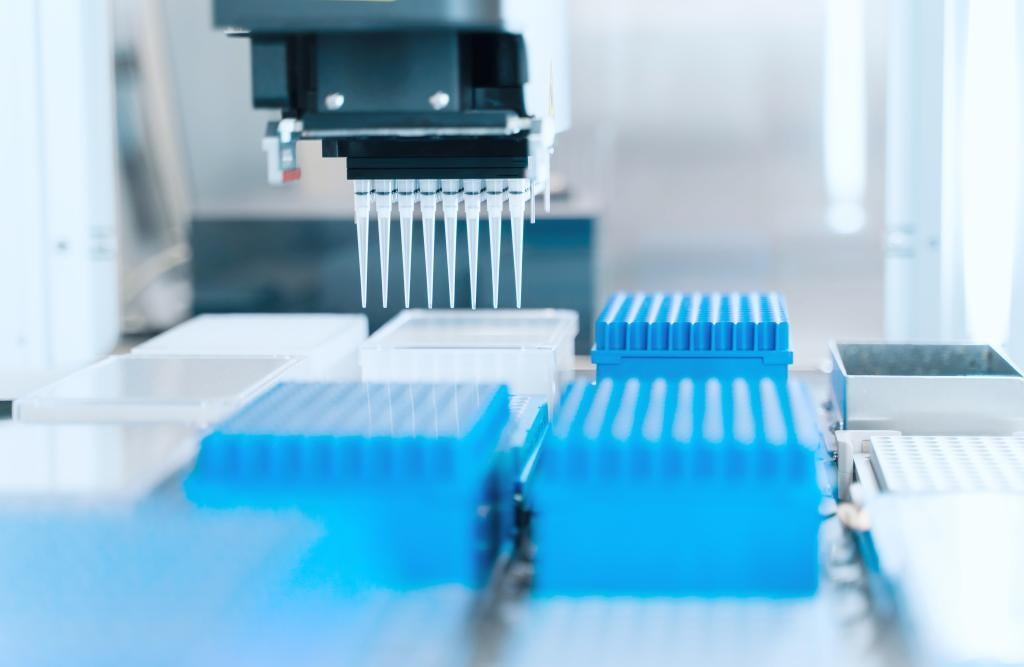
- Our advanced Assay Assembly Automation enhances the speed and scale of our Hit Identification capabilities. By integrating flexible, state-of-the-art lab automation with the most scientifically relevant assays, IQVIA Laboratories can accelerate your project progression, deliver faster insights and generate robust datasets that support AI-enabled modelling and decision-making in drug discovery.
-
Drug discovery assay cascade design
-
Recombinant protein production
-
Cell line generation
-
Data science and bioinformatics
-
Computational chemistry and modeling
-
Medicinal chemistry expertise
Why Choose IQVIA Laboratories for Hit Identification
Our scientists apply a flexible, science-led approach that aligns the right expertise and technologies with the biological questions being addressed. The result is a comprehensive hit identification strategy designed to deliver high-quality starting points with greater confidence and efficiency.
Benefits include:
- Integrated target-based and phenotypic screening expertise
- Access to diverse screening technologies beyond traditional high-throughput screening
- Access to carefully curated compound libraries
- AI and computationally enabled discovery capabilities
- Advanced cellular and multiomic screening platforms
- Fragment and affinity-based screening expertise
- End-to-end support from target validation through lead optimization

Frequently Asked Questions About Hit Identification
What is hit identification in drug discovery?
Hit identification is the process of discovering compounds that demonstrate measurable activity against a biological target or disease-relevant phenotype. These compounds, known as hits, serve as the starting point for hit-to-lead and lead optimization activities.
What is the difference between target-based and phenotypic screening?
Target-based screening focuses on a known molecular target and identifies compounds that interact with or modulate that target. Phenotypic screening evaluates biological responses in cellular systems and can uncover active compounds even when the precise molecular target is unknown.
How can virtual screening support hit identification?
Virtual screening uses computational modeling, structural biology, and ligand data in addition to AI-enabled approaches to predict which compounds are most likely to demonstrate biological activity. These methods can improve efficiency, focus experimental efforts, and complement traditional screening campaigns.
Which screening technology is best for my discovery program?
The optimal approach depends on factors including target biology, assay availability, structural information, therapeutic area, and project objectives. Many successful programs combine multiple screening technologies to maximize discovery opportunities.
